
Laetitia Morlat
Founder Quiet Luxury Group
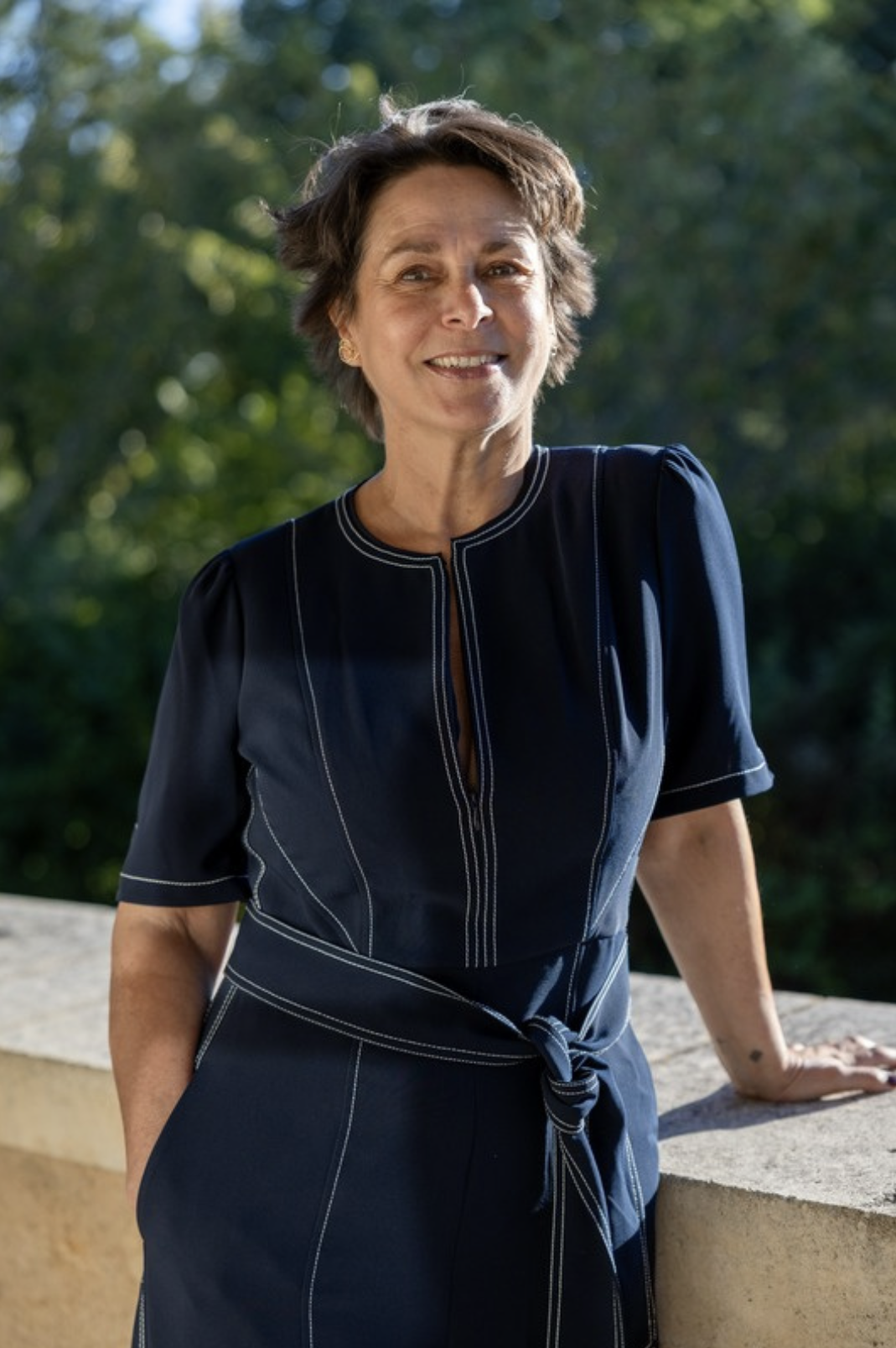
Your story begins in the Périgord Vert, a place that still seems incredibly close to your heart. When you think back to your childhood there, what are the memories that most shaped your appreciation for beauty, craftsmanship, and hospitality?
I have no conscious memory of discovering beauty; it was simply there, without our ever needing to name it. My childhood followed the rhythm of the seasons, large family tables and an immense sense of freedom. I would set off on my bicycle for the day, exploring paths and caves with my cousins, and we would return tired, happy and full of sunshine. Meanwhile, the adults laughed and simply enjoyed being together. Craftsmanship was a natural part of my surroundings. The Périgord is known as the land of a thousand châteaux, and I grew up watching craftspeople and family friends restore houses, working with stone, timber and traditional roofs. Their skills were simply part of everyday life. Hospitality was equally spontaneous. The large family houses did not always have a telephone, so we would call on one another to pass on a message and often stay for lunch or dinner. No one really counted the guests. That freedom, those open houses and that unceremonious generosity profoundly shaped my understanding of hospitality.
The Périgord Vert is clearly much more than a location for you; it feels like part of your identity. What did growing up there teach you about life, and are there values from that childhood that you still find yourself returning to today?
The Périgord Vert taught me to think in terms of the long view: the time it takes for a tree to grow, for a craftsperson to master a gesture, and for a house to reveal its story.
Above all, it taught me a form of loyalty: to places, to people and to the stories that came before us. Some landscapes still look much as they did in my childhood. I feel a responsibility to preserve that continuity while allowing these places to remain alive. That principle guides every restoration we undertake today.
That connection to the region has continued throughout your life, and last year you were recognized for your contribution to tourism in the Dordogne. What did that recognition mean to you personally?
I received it in circumstances that gave it a very particular intensity. Only a few days earlier, I had undergone more than eight hours of brain surgery to remove a tumor. Until the last moment, I did not know whether I would be able to attend. Simply standing there to receive the distinction already felt like a victory. Of course, it recognized the commitment of the entire team to the Périgord Vert, and more than twenty years of perseverance and investment in exacting hospitality, far from the usual destinations, in a region I love deeply for its tranquility and natural beauty. But I did not receive it as the culmination of something. I received it as a promise: that I was on the right path, and that I should continue to bring the Périgord Vert to life, preserve its singular character and allow others to experience, in turn, what this land has always given me.
Quiet Luxury Group feels as though it grew from something deeply personal rather than simply from a business opportunity. Was there a particular moment when you realized you weren't just restoring remarkable places, but creating your own vision of how people should experience them?
I only became fully conscious of it recently, when I looked back at the path we had travelled. Each project had begun separately, yet with the same intention: to save a place, restore its beauty and, above all, bring it back to life. At the Domaine de Vieux Mareuil, as at our other estates, I wanted to recapture what I had known as a child: houses full of life, families gathered together, children roaming freely, meals shared and a direct relationship with nature. When I then saw the estates, our market gardens and our jewelry Maisons begin to speak to one another, the coherence became clear.
Quiet Luxury Group gave that vision a name: awakening places and Maisons without altering their character, so that their stories can continue.
The phrase “quiet luxury” is everywhere today, often used to describe a certain understated aesthetic. Your interpretation feels much deeper than that. What does quiet luxury mean to you, not just in business, but in the way you live?
To me, quiet luxury is not an aesthetic but a way of living. It means having command of your time, being surrounded by your children, welcoming people around a large table, walking in nature or staying in a house that has retained its soul. In our work, it means restoring without betraying, favoring craftspeople and materials that endure, respecting the seasons and giving existing stones a new life. It is a luxury whose value lies in the experience itself and in what that experience becomes over time.
Rouvenat adds another dimension to that philosophy. Rather than continually sourcing new stones, the Maison gives existing stones and materials a new life through a circular approach to jewelry. What drew you to Rouvenat, and how does that idea of preserving, reimagining and passing things on connect with your wider philosophy?
What first drew me to Rouvenat was the almost novelistic story of its rediscovery. After a long search, Marie Berthelon found more than 3,000 gouache designs by Léon Rouvenat, preserved in twelve notebooks, at a small antiquarian bookseller in Paris. The entire creative memory of a great forgotten Maison had re-emerged from a chest.
That discovery perfectly illustrates what unites us: recognizing the value of what already exists, preserving it and giving it a new life. It is also the essence of Rouvenat's circular approach to jewelry. Antique stones are inherently individual: each has its own cut, tone and character. Above all, each carries a story, sometimes a family story, before becoming part of a new creation and beginning another chapter. At a time when luxury can sometimes feel increasingly uniform, that singularity matters. It gives rise to genuinely unique jewels, made to be lived with and, in time, passed on again.
Family is also at the heart of your world. You have five children and are incredibly close, and now your son Theo is taking on a role in the family's Domaine in the Dordogne. What is it like seeing the next generation becoming part of something that means so much to you?
Seeing my son Théodore choose to become involved in the Domaine is profoundly moving. It means that this family story carries enough meaning for him to want to help it grow in his own way. Other members of my family, including my cousins Héloïse and Brice, also hold important roles in this endeavor. Working with family requires everyone to find their rightful place, but the trust built over time gives the project a particular strength and allows us to make decisions across generations. We see that same continuity at Vever, revived by Camille and Damien Vever, a sister and brother from the seventh generation. Each generation receives a story, brings its own vision to it and prepares it for the next. Family businesses possess an added depth of spirit that allows decisions to be rooted in the long term. The thought that my children, and perhaps one day their children, might reshape this vision with their own sensibilities and ideas gives me immense joy. It would be the clearest sign that the story has remained alive.
“It would be the clearest sign that the story has remained alive.”
You only moved to London recently. How has the city surprised you? Has there been anything about London life – or the people you've met here – that has made it feel like home more quickly than you expected?
London has surprised me with the ease with which it brings tradition and openness to the world together. I have met people who are genuinely curious about the stories of the jewelry Maisons Rouvenat and Vever, our estates and the Périgord Vert, a region many of them had yet to discover. The dinners, exhibitions, and gatherings organized by Entourage quickly created a sense of connection. They made me feel welcomed, while opening new bridges between London and the French stories I want to share.
You've become such a wonderful part of the Entourage community, and we know how much you enjoy the occasions that bring people together, from our Rouvenat dinner last winter to the races at beautiful Ascot. What do those moments of celebration, connection and perhaps a little escapism bring to your life?
First and foremost, they bring me the joy of being fully present. The Rouvenat dinner allowed us to introduce the Maison through very personal conversations; Ascot brought together elegance, tradition and a particularly English sense of lightness. I do not see these moments as an escape from reality. They are part of life: they create memories, spark unexpected encounters and sometimes open the way to new projects. Entourage has a particular gift for bringing very different people together in a refined setting, while allowing connections to form naturally.
Has there been a journey, a destination or an encounter that fundamentally changed the way you think about luxury, hospitality or the art of living?
Japan, where I lived for six years, profoundly shaped my outlook. I discovered a particular relationship with time, silence and the precision of a gesture. In Japanese hospitality, nothing is demonstrative, yet every detail is considered. Kintsugi expresses this beautifully: rather than concealing the cracks in a broken ceramic, they are traced with gold. The object retains the marks of its history and acquires a new beauty through them. That philosophy guides my work at Quiet Luxury Group. Restoring a place or reviving a Maison is not about erasing its past, but about acknowledging its vulnerabilities, transforming them into strength and allowing its story to continue. It also resonates deeply with my own life.
“Nothing is demonstrative, yet every detail is considered.”
Hospitality, at its best, can make someone feel completely at ease without quite knowing why. What does exceptional hospitality mean to you personally, and what is the human element that you don't believe technology will ever be able to replace?For me, exceptional hospitality begins when we stop treating someone as a client and welcome them as a person. It can be expressed through the smallest details: a fire lit before their arrival, a dish prepared with produce from the Domaine, a room arranged around their rhythm, or a conversation that continues around the table. Technology can make a stay more seamless, but it cannot create the spontaneous generosity that leads us to add another place at the table, change a program or share a story. It can anticipate a known need; it will never replace the human desire to care for another person.
You've spoken very openly about how illness changed your relationship with life. Has it changed the way you think about joy, ambition and how you choose to spend your time?
Illness has made my choices clearer. I no longer postpone joy until better days; I look for it in everyday life, with my family, in the projects I build and in the people with whom I share them. My ambition has not diminished, but its nature has changed. I want to devote my energy to places, Maisons and projects that carry meaning and can be passed on. Above all, I have understood that time belongs to us no more than the places and stories entrusted to our care. We are merely their custodians. And so I live more intensely, love fiercely and now create with a freedom I did not previously allow myself.
“We are merely their custodians.”
You once said, “This illness has given me infinitely more. For five years, I have never felt as alive as I do now.” That is an incredibly powerful perspective. How has this experience changed the way you approach life today, and what you choose to value most?
This experience has taught me to settle into the present: to see an honest conversation through, to remain at the table as a meal unfolds, and to be fully present with my family and friends. It has also taught me to move through pain and uncertainty with faith.
Above all, I have understood that I do not endure alone, but through the bonds I share with others. When I no longer have the strength to believe, others believe for me; when I cannot carry everything, they step in. That trust has helped me to hold on less tightly, to let each person take their place and to pass on more freely. On Camille Vever's French-language podcast, Les Voix de l'audace, I tried to put this paradox into words: illness has made me more vulnerable, but it has also given me a new clarity. Today, I feel profoundly where I am meant to be. I am less concerned with holding on or remaining in control than with sharing what I have received, so that both people and Maisons can find their own path, flourish and continue to grow beyond me. That is what matters most now: being present, placing my trust in others and passing things on freely enough for someone else to write the next chapter.
“Today, I feel profoundly where I am meant to be.”
With everything you've built – Quiet Luxury Group, Rouvenat, the places you've helped preserve and, perhaps most importantly, your family – what does the idea of legacy mean to you now?
Legacy means keeping alive what has been entrusted to us and giving it the means to endure. For Quiet Luxury Group, that means preserving estates such as Vieux Mareuil, Montagenet and the Moulin de Vigonac, while giving jewelry Maisons such as Rouvenat, Vever, and Oscar Massin a new future. Laetiagri embodies another essential dimension of that legacy: our connection to the land. For years, we have been developing organic market gardening in the Périgord Vert, planting and experimenting to supply our estates as well as local restaurants and schools. Legacy also means caring for the living world and giving something back to the territory that gives us so much. I want to give my children roots, values and the confidence to follow their own paths freely. True legacy lies not only in the places or businesses we leave behind, but in enabling future generations to transform them, help them grow and, in turn, pass them on. And finally, when you look ahead, what are you most excited about, both professionally and personally?
Professionally, I am excited to make the connections between the different worlds of Quiet Luxury Group fully visible. For 2027 and 2028, we are preparing gatherings in the Périgord Vert where jewelry, craftsmanship, hospitality, gastronomy and the living world can enter into dialogue. I want to create experiences rooted so deeply in this region that they could exist nowhere else. Personally, I want to continue creating while making more room for my children, my family and the teams who are part of this story. What gives me joy today is seeing people and Maisons flourish, connect and imagine possibilities I could never have conceived alone. I approach this new chapter with confidence, certain that it still holds wonderful surprises for us.