INTERVIEW WITH…
Carla Shen
Collector, Philanthropist, Proud brooklynite, #CarlasCamo
INTERVIEW
You grew up in a family where art, artists, and giving back were essential, they were all core parts of everyday life. Your parents were avid collectors themselves, and your mother was a ceramicist with a pottery studio and shop; they were also deeply involved in the Brooklyn Museum, among many other philanthropic endeavors. Can you tell us more about that childhood, where the arts and culture were so deeply valued?
I grew up as an only child in Brooklyn, fortunate to be immersed in art and culture from an early age. My parents regularly brought me along to art exhibitions, as well as music, theater, and ballet performances, instilling in me both a deep appreciation for the arts and a lasting commitment to supporting them.
How did this childhood shape your own eye and vision, both in your personal collecting as well as in your patronage and support of artists and cultural institutions?
I watched my parents devote real time and care to researching artists and works before acquiring anything. When they did choose to buy, it was always something that genuinely moved them - something they fell in love with. From them, I learned the importance of doing your homework, but also of trusting your instincts when a work stops you in your tracks or lingers in your mind.
Your collection spans both emerging and established artists, and includes a focus on AAPI artists. How do you approach collecting, what emotional or intellectual signal tells you a work belongs in your world, and what would your collection say about you that words cannot?
I’m very much an emotional collector rather than an intellectual one. There are artists I’ve followed for years whose work I hope to acquire, but ultimately, I decide to buy when a piece sparks a powerful emotional response. It’s hard to define - more instinct than analysis, but when something truly resonates, I tend to fall head over heels for it and can’t quite let it go.
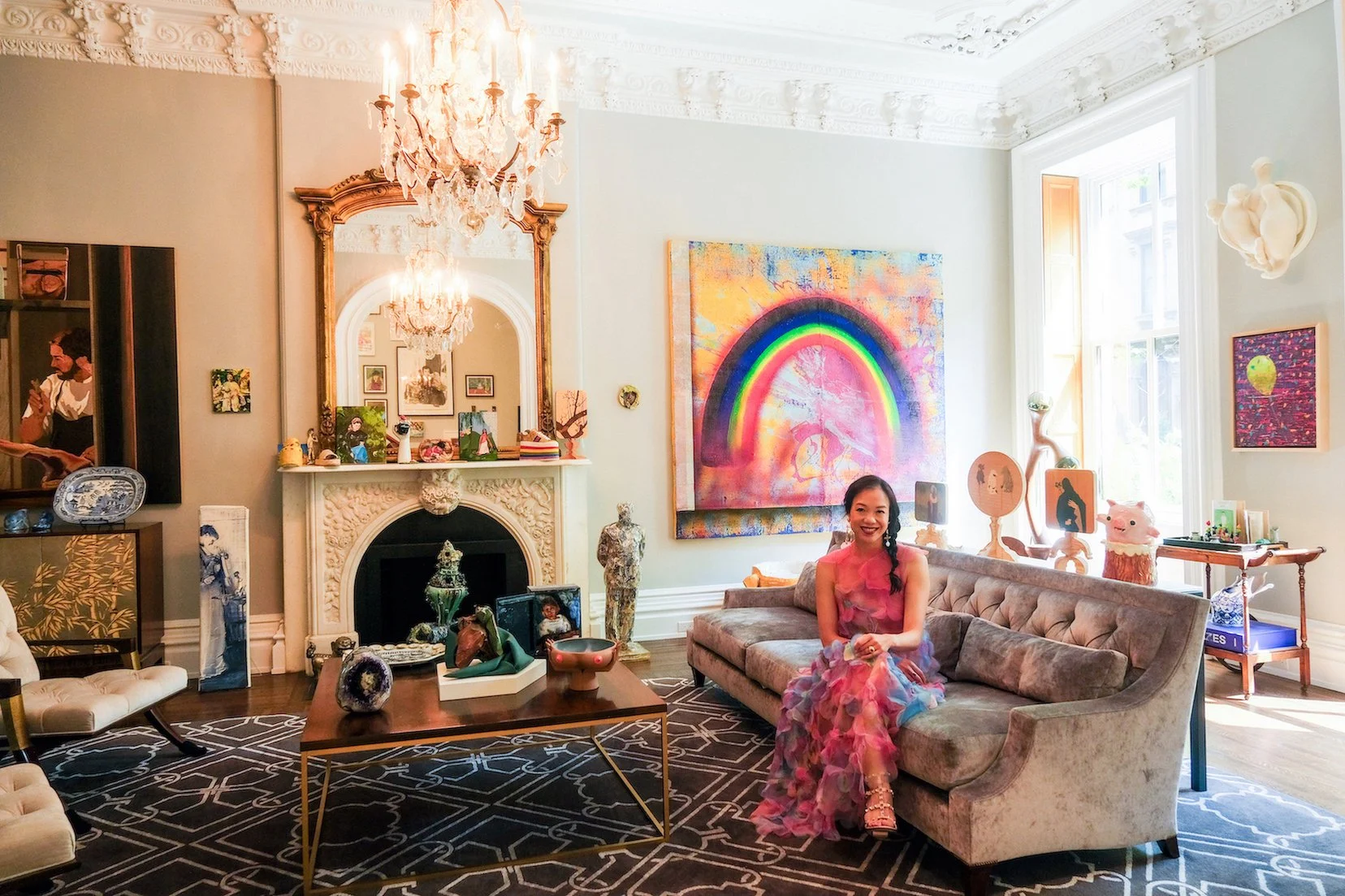
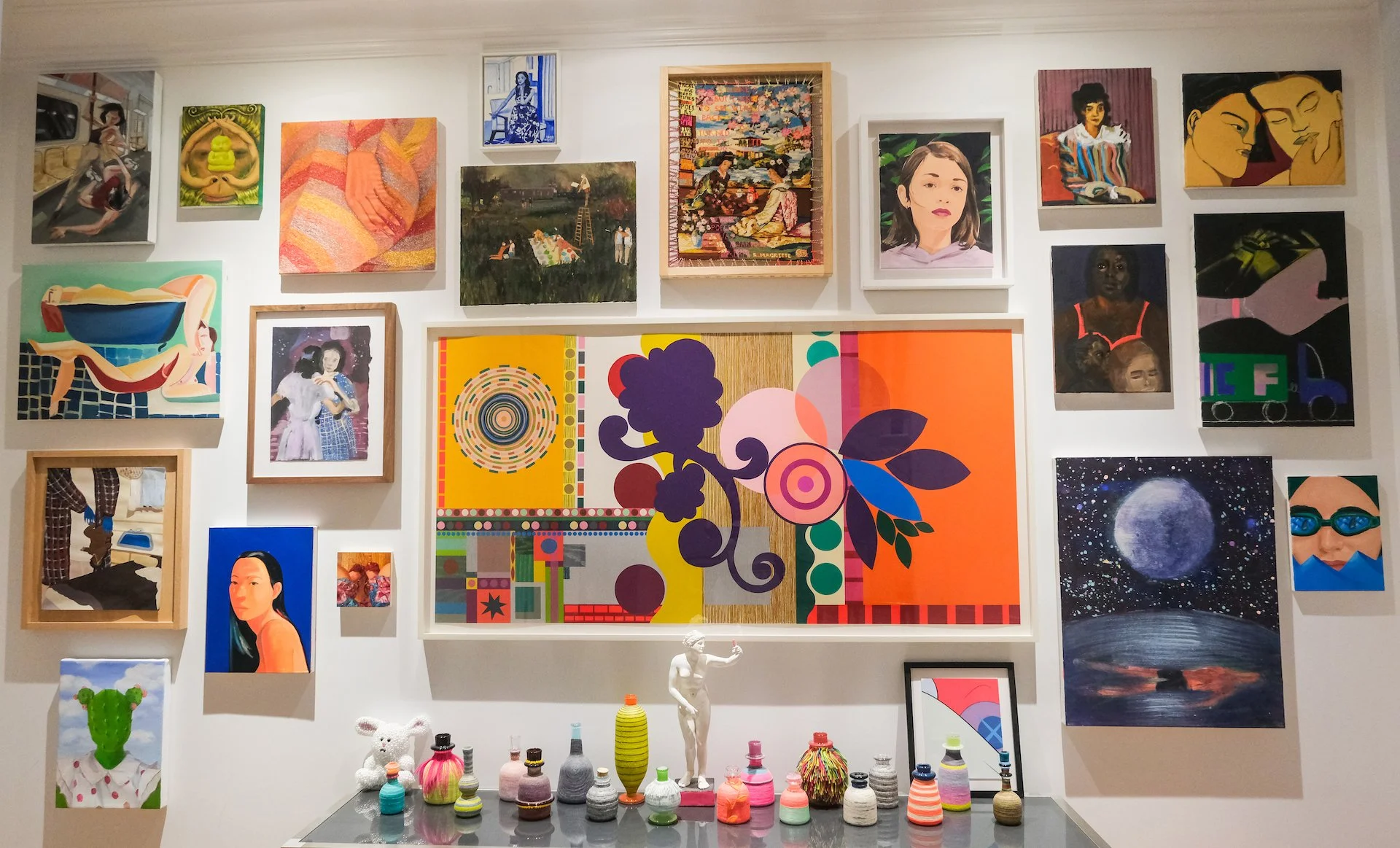
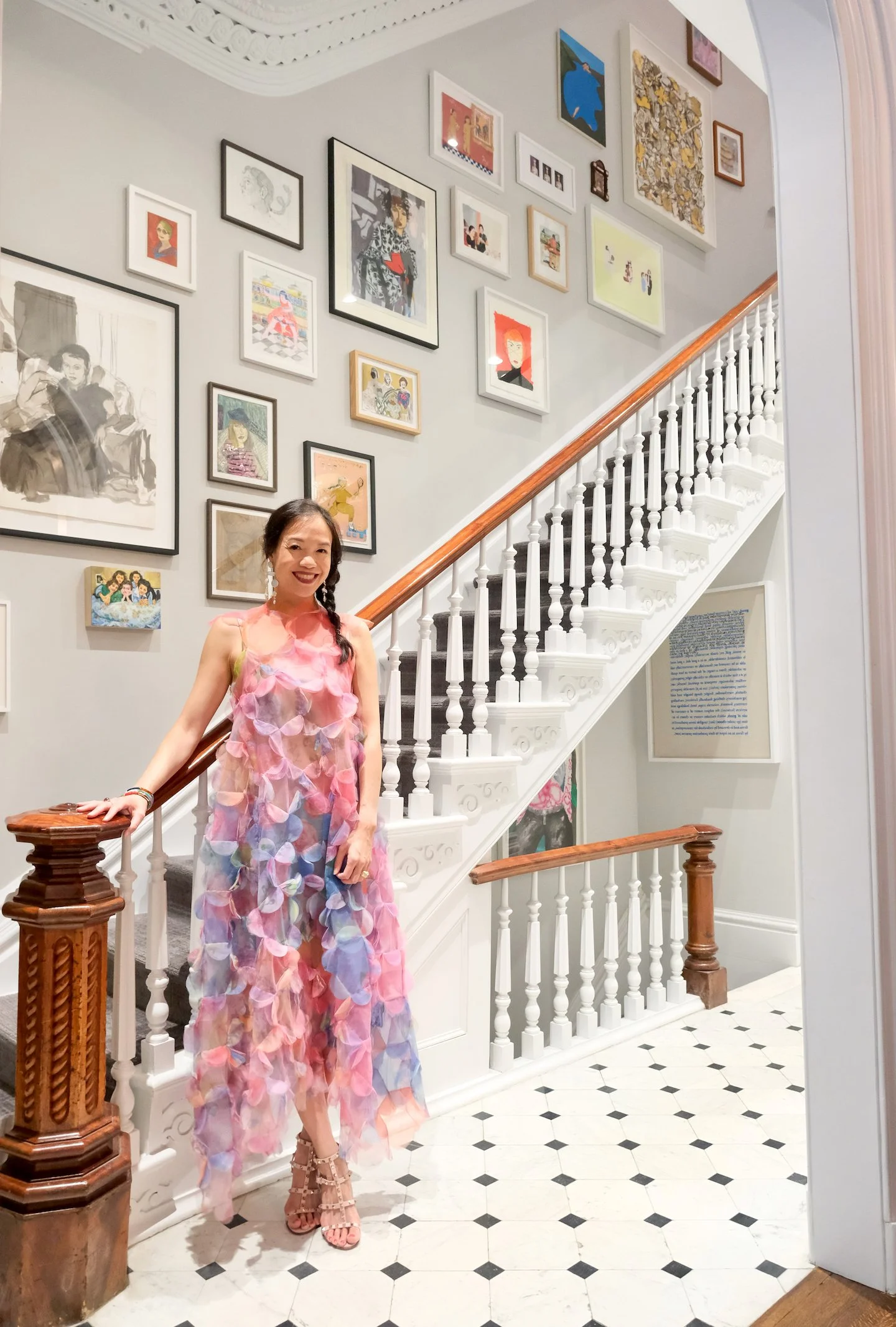
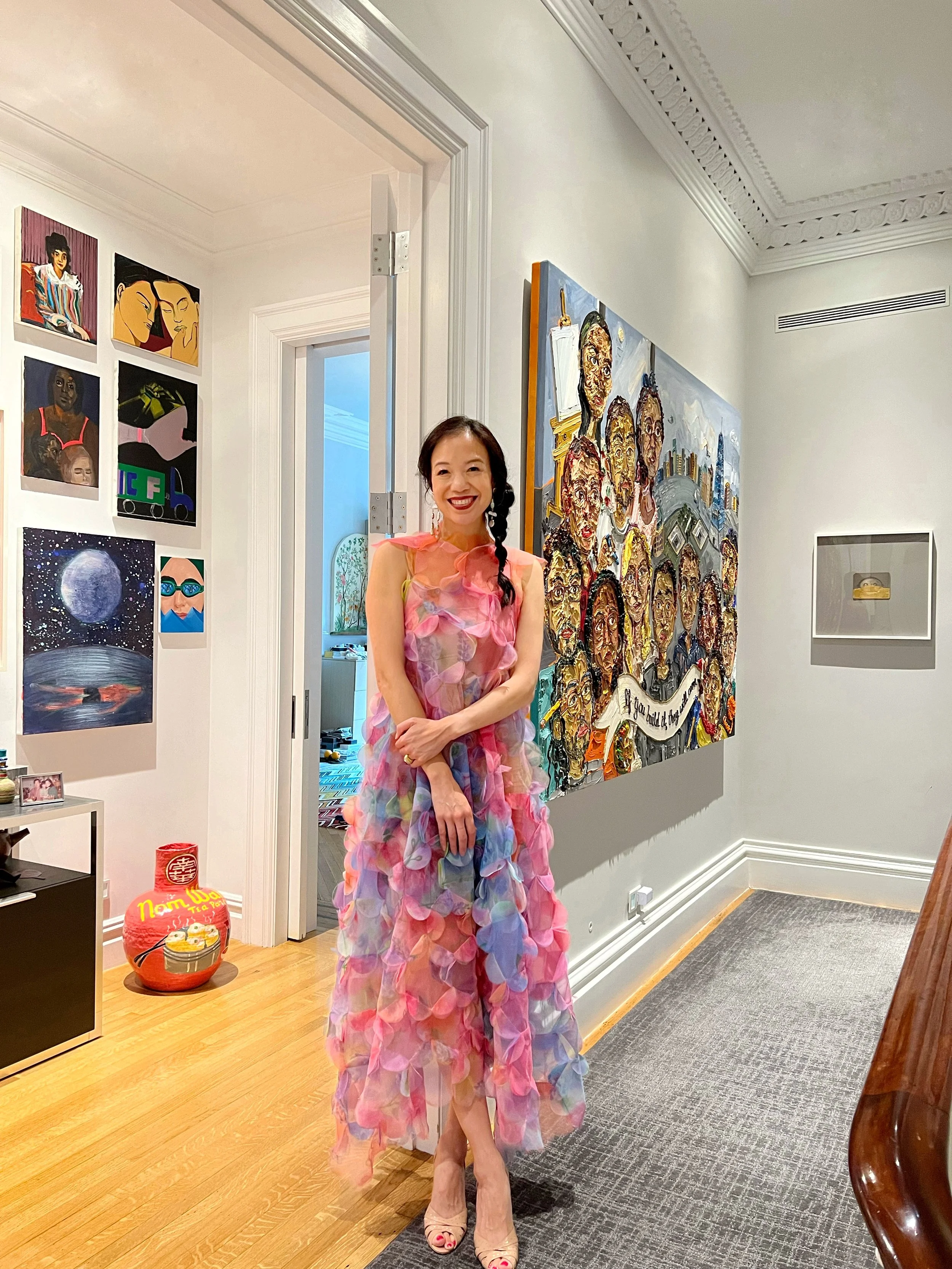
Over the past five years, I’ve become more intentional about collecting work by AAPI artists, which may make my collection feel eclectic at first glance. Still, a few through lines are clear: I’m drawn to vibrant color, rich texture, especially in fiber art, collage, and ceramics, and a sense of whimsy. Many of the works I collect carry a playful spirit or subtle humor that I find irresistible.
What are some of your absolute favorite works in your collection, and what would be a dream acquisition or two?
It’s nearly impossible to choose just a few favorites. Among the standouts is a Mickalene Thomas painting on loan to her Paris solo show, which I’ve been especially proud to share, as well as a Maria Berrio collage painting of Japanese paper - a delicate, intricate work that I find endlessly captivating.
More recent acquisitions I love include a Sasha Gordon painting, a small Dominique Fung painting in an antique Chinese box, and a Melissa Joseph felted work in a found tire, each of which brings its own unique texture and presence to the collection.
As for a dream acquisition, I would be thrilled to own any work by Martin Wong.
Many collectors speak of “art pilgrimages”. Which destinations—whether fairs, studios, or cities—have most shaped you?
Two vastly different art experiences have shaped the way I see and live with art. One was a visit to Marfa, where the minimalist legacy of Donald Judd has transformed the entire remote town. There, everything seemed to slow down, allowing for a deeper appreciation of his sculptures set against the stark desert landscape. I was struck by the quiet power and beauty of simplicity.
At the other end of the spectrum, I’ll never forget my first visit to the Barnes Foundation. The densely hung, salon-style walls were initially overwhelming, but over time the experience became almost meditative. In a completely different way than in Marfa, I again felt compelled to slow down—this time to take in the richness and abundance of the works around me.
On a personal level, that experience has stayed with me. I now have several densely hung, salon-style walls in my own home, and I love the way the works interact with and enhance one another.
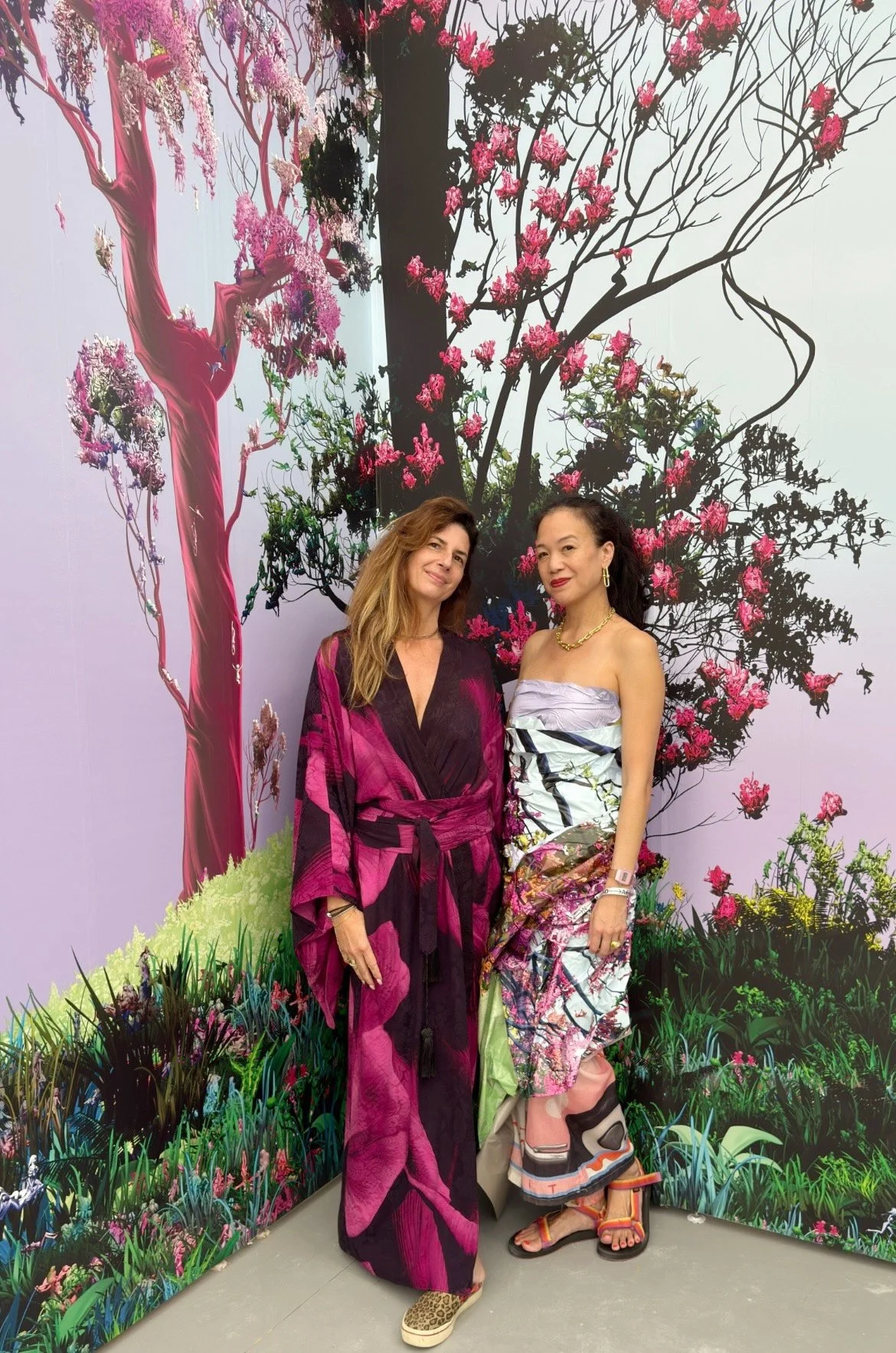
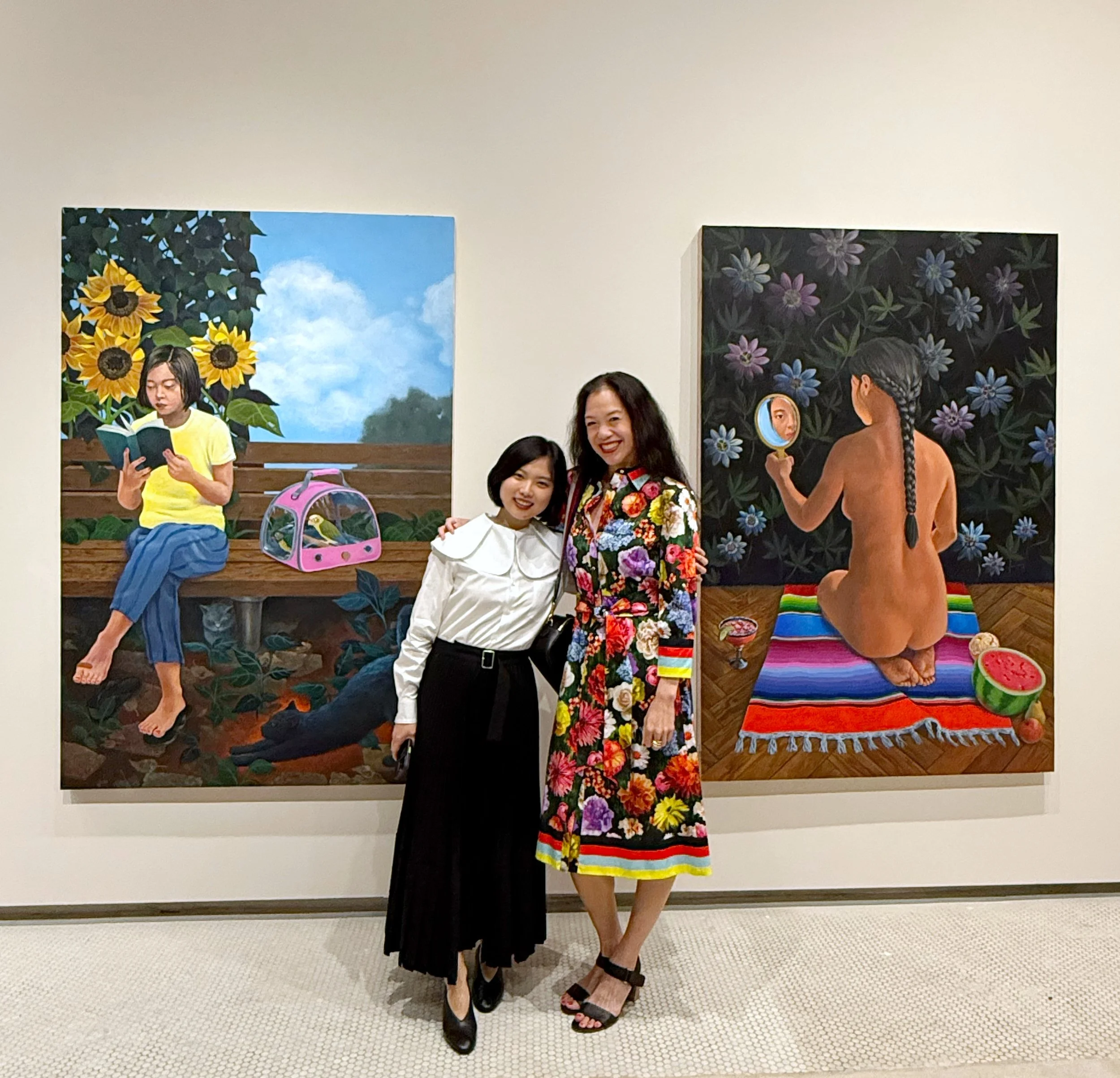
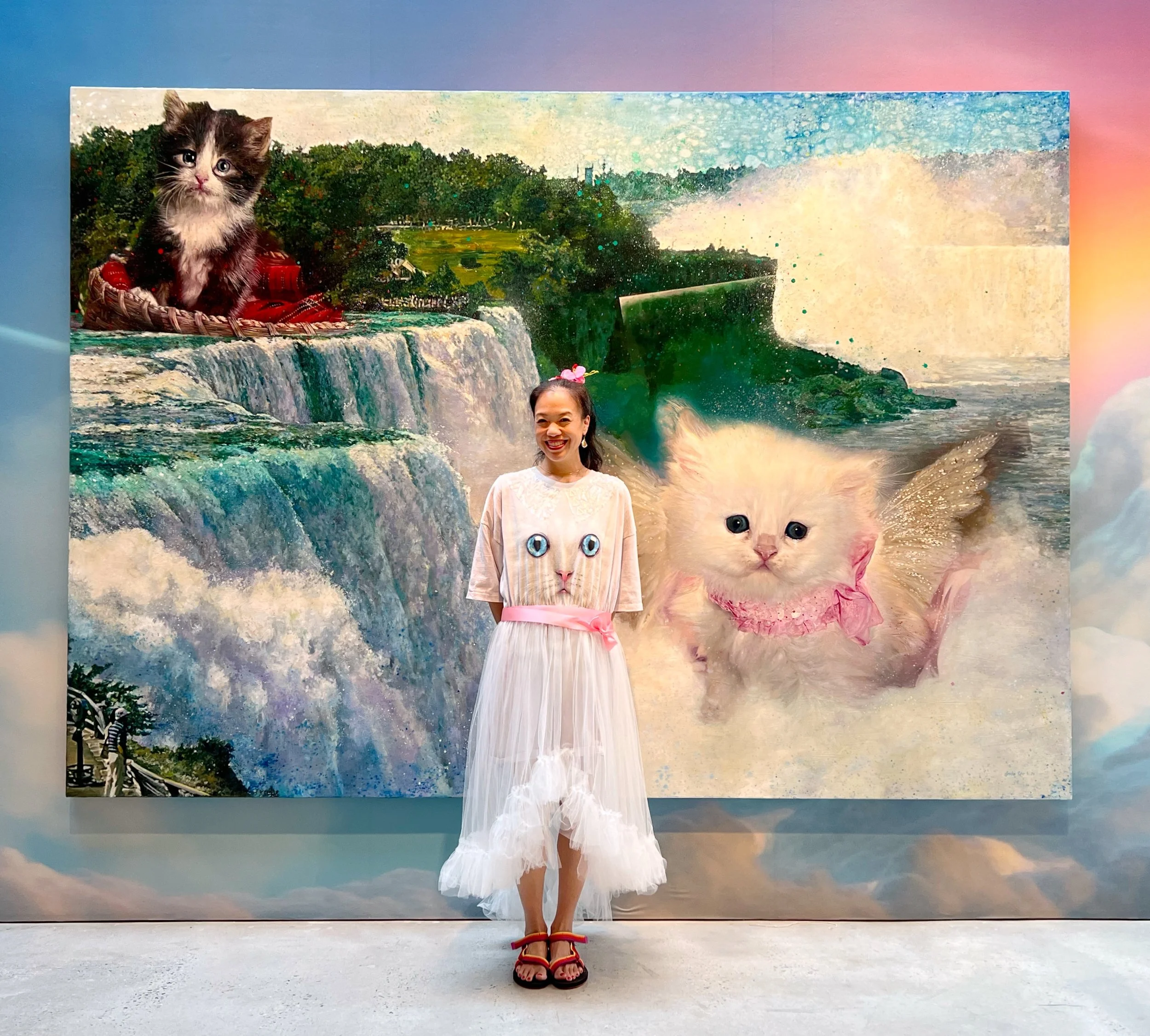
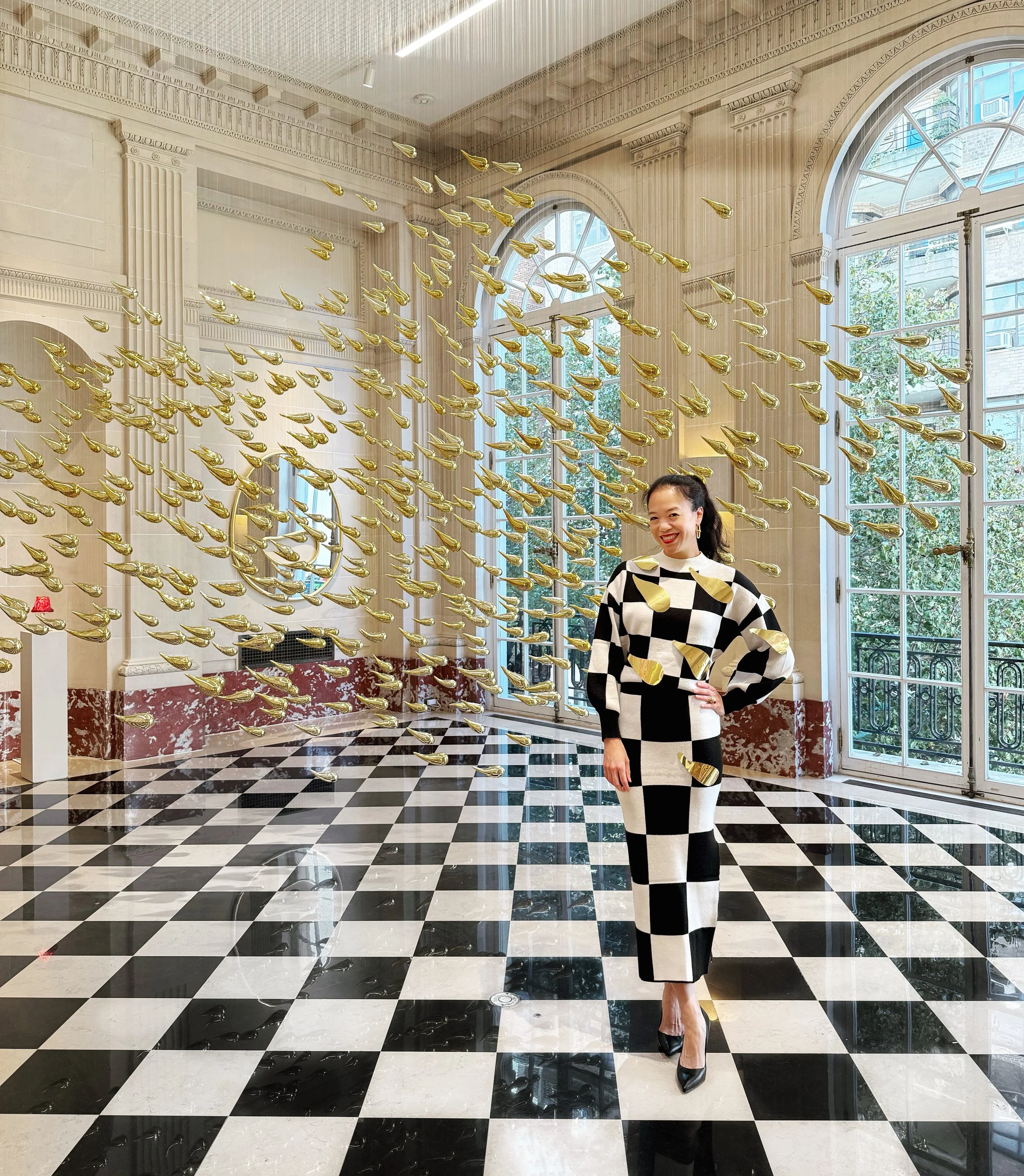
You are well known for matching incredible outfits to works of art, a.k.a. #CarlasCamo; how did this start, and what have been some of the highlights for you? Are there any pairings you haven’t done yet but would love to create?
My #CarlasCamo project began quite accidentally in 2016, when my daughter was eight. We were both dressed in pink and happened to take a photo in front of a vividly pink-saturated photograph by Richard Mosse. When we looked at the image afterward, we seemed to dissolve into the artwork—we completely blended in. Someone asked if we had planned it as a tribute. While we hadn’t, that moment sparked the idea: what if I intentionally honored artists and their work by dressing to match them?
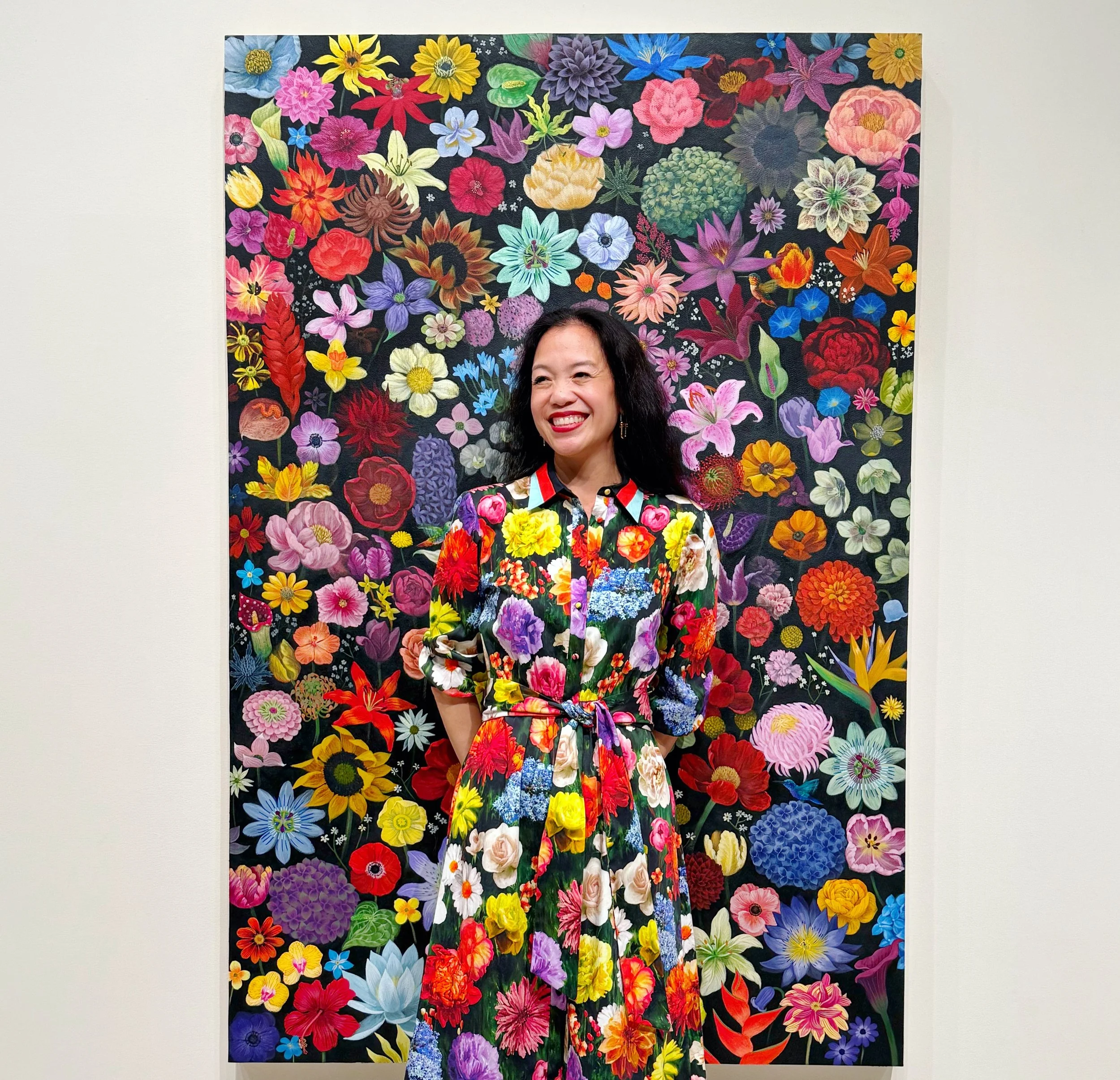
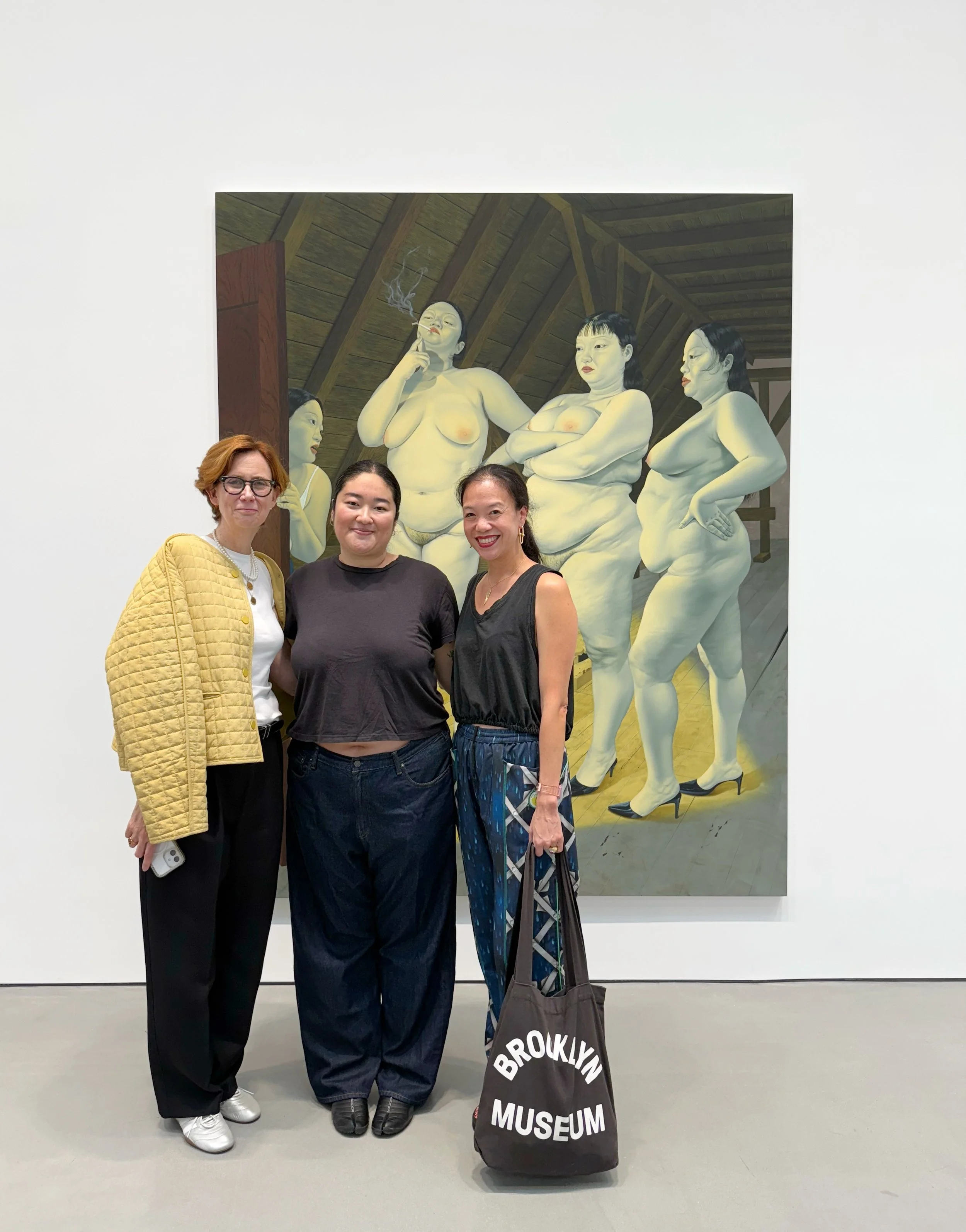
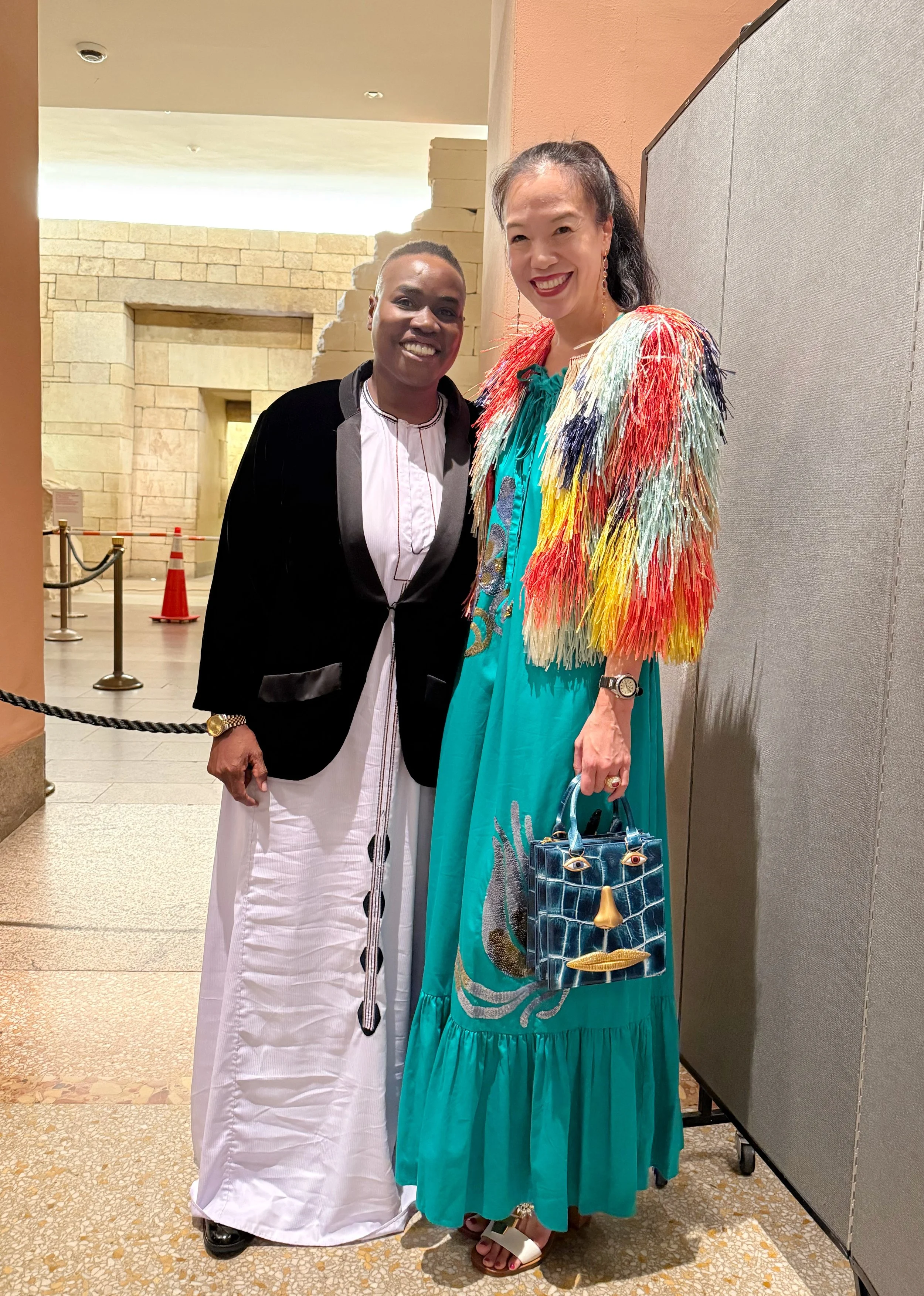
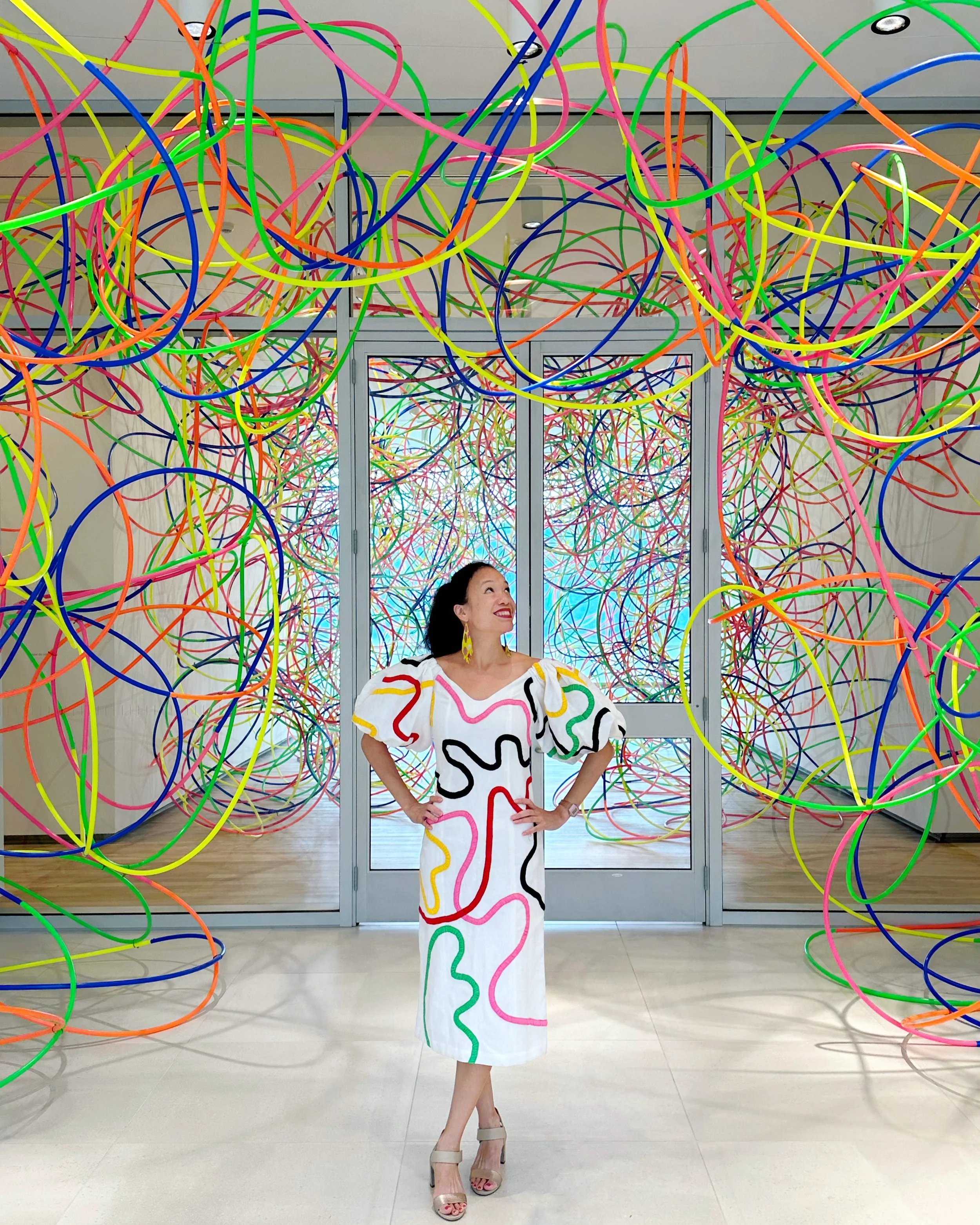
From then on, every exhibition I visited became an opportunity to reflect the art through what I wore. Over the years, the project has become more deliberate. I now plan looks well in advance to align with specific shows or works. The most meaningful feedback is when someone tells me they discovered an artist, visited a gallery, or engaged with a show because of one of my posts. The art world can feel intimidating, and I hope this project makes it more approachable and inviting.
Dressing to match art has become a joyful creative outlet, and my favorite match is always the most recent one. A dream scenario? Gathering a group of friends and finding a large mural where we could all try to disappear into the composition together.
Separate from art, what is a passion or interest of yours that people perhaps do not know about?
Growing up, I was a nationally ranked junior squash player and was recruited to compete in college, where I ultimately graduated as captain of my varsity team. While I only play intermittently these days, it’s something I’d truly love to return to more consistently.
Philanthropy has also of course been a huge part of your family’s legacy, and your own now as well. What organizations are of particular importance to you, and what other art and cultural organizations do you think are doing a tremendous job, especially in engaging young people or bringing greater visibility to lesser-known artists and spaces?
The two organizations I’m most deeply involved with are the Brooklyn Museum and Green-Wood Cemetery. Both hold personal significance for my family and me, and each is an extraordinary cultural institution doing trailblazing work in its own right.
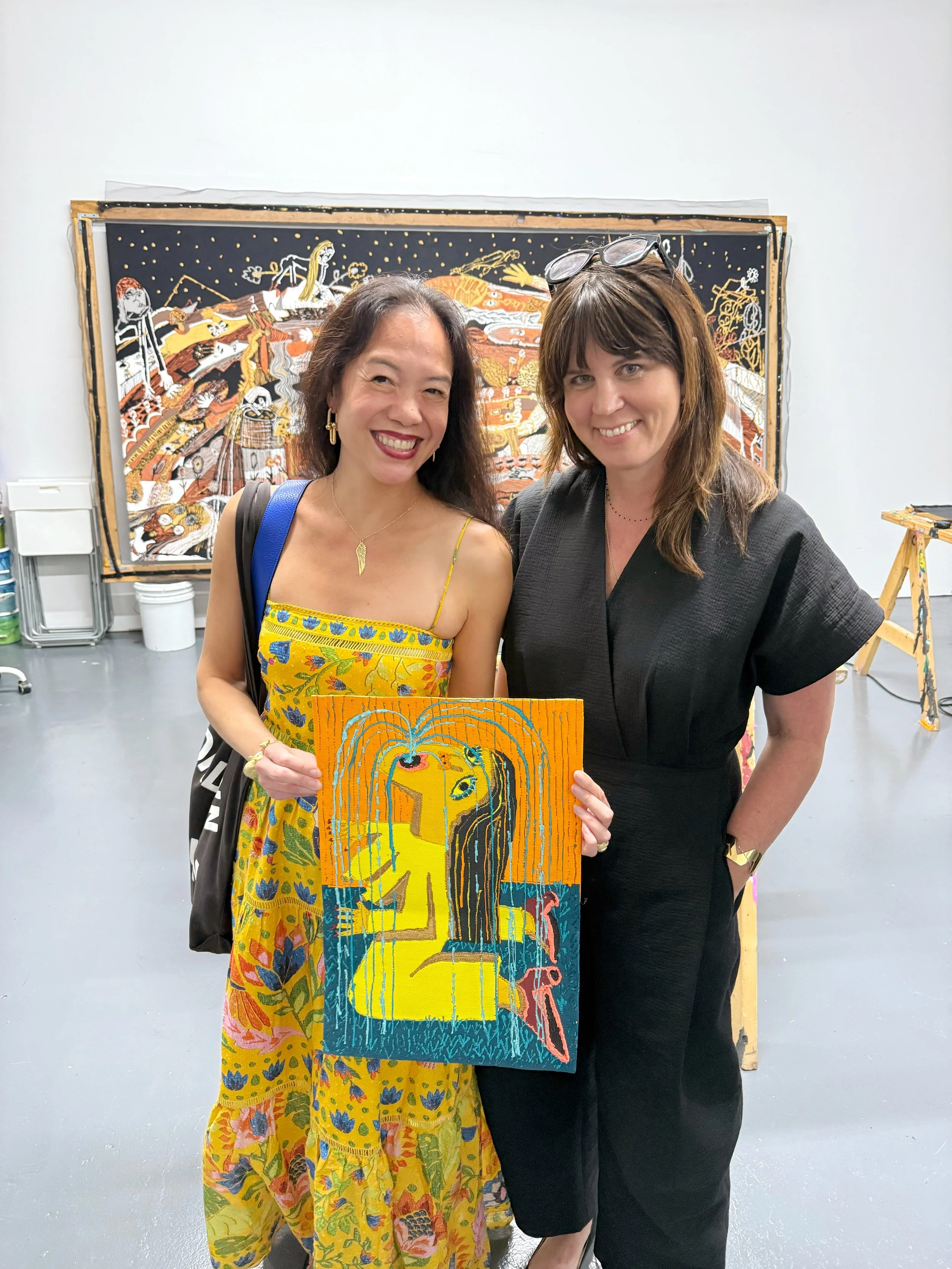
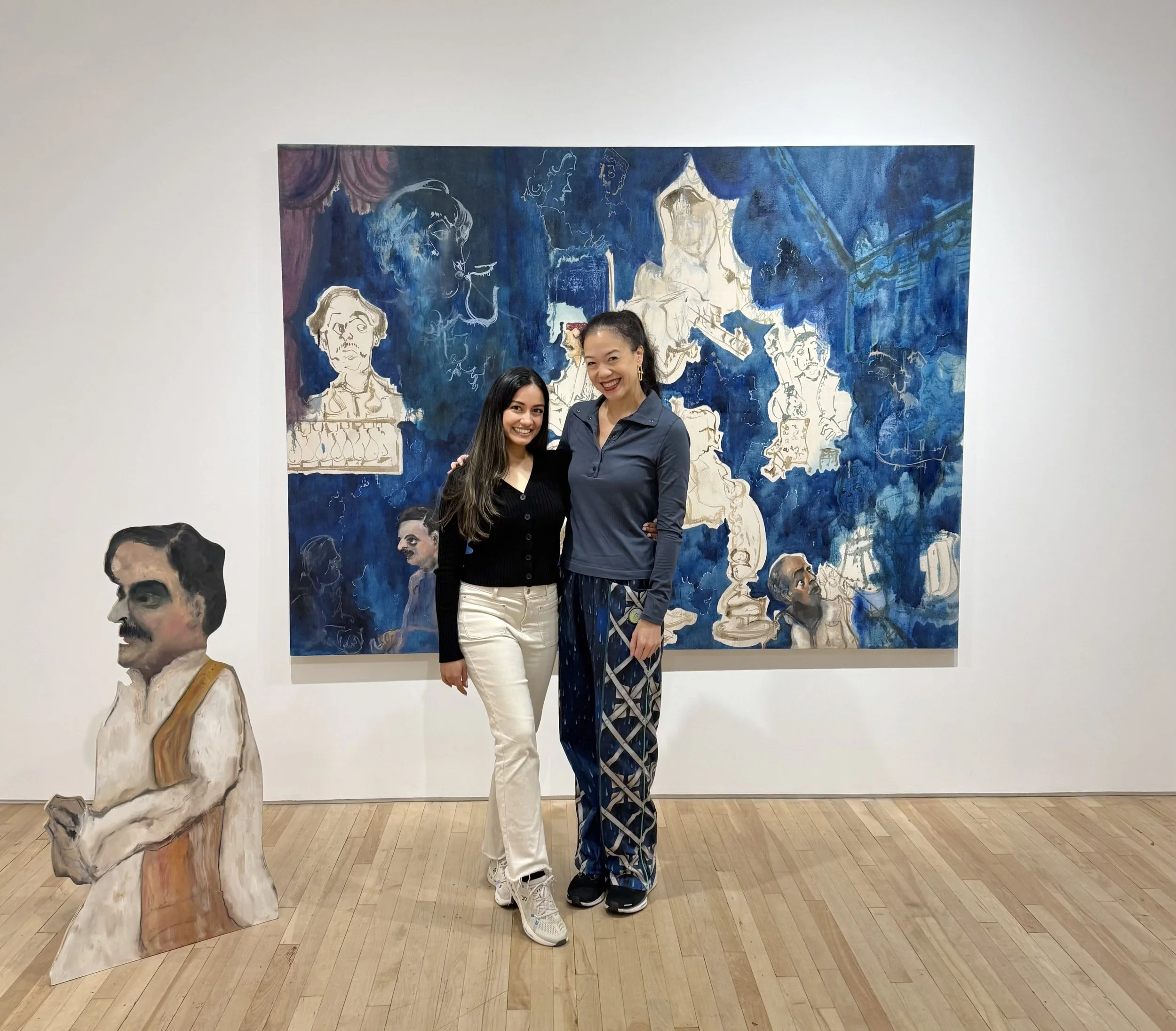
There are, of course, so many remarkable organizations making an impact that it’s difficult to single out just a few. Given my focus on collecting AAPI artists, I’m also actively involved with The Here and There Collective and Civil Art, two groups that have built strong, supportive communities for AAPI artists and curators.
Has your mother’s artistic talents and patronage influenced you as a mother yourself?
I strive to carry my late mother’s spirit into every part of my life—her creativity, generosity, kindness, and unwavering love and support. Watching my teenage daughter develop a passion for ceramics, I can’t help but feel that she’s inherited both her interest and her talent from my mother.
Do you collect with legacy in mind, whether institutional donation, family, or cultural impact? And what legacy or vision do you hope to leave for your own family and future generations of artists and collectors?
My collection is a deeply personal expression of who I am and what brings me joy every day. I don’t assume my daughter will share my tastes, so I don’t collect with the primary intention of passing works down through generations. That said, I do hope to donate some pieces to institutions over time. I’ve already made several promised gifts to the Brooklyn Museum, and I plan to continue supporting its growth, particularly in building a stronger collection of contemporary works by AAPI artists.